The Paella Paradox: A Study in Edible Diplomacy

There are few dishes in Spain capable of turning lunch into a constitutional debate.
Paella is one of them.
There is a specific type of silence that descends upon a Valencian table the moment a visitor mentions adding “a little chorizo” to a paella. It is not a silence of confusion, but one of profound, spiritual mourning.
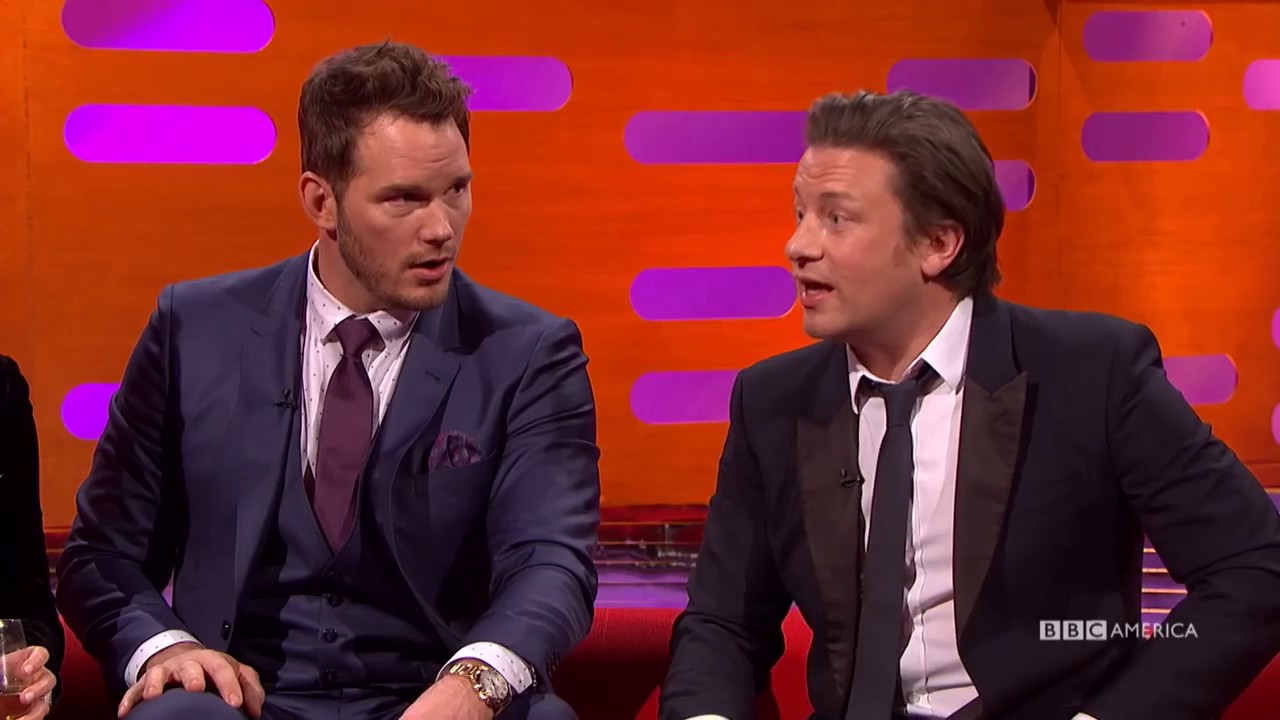
In 2016, even Jamie Oliver discovered that putting chorizo in a paella was enough to unite a remarkably divided Spain in collective indignation. His recipe became something of an international diplomatic incident, with Valencians in particular making their feelings known. The Guardian documented the episode rather beautifully.
To the uninitiated, paella is simply a Spanish rice dish.
To the Valencian, it is something rather more complicated: a negotiation between rice, water, fire, landscape and time. Or, if you prefer, a form of sacred geometry involving fire, iron and earth.
The trick is knowing which parts are tradition, which are preference, and which might get you quietly disinvited from Sunday lunch.
The Ancestry of the Grain
Before paella became a global icon, rice was already changing the landscape of Valencia.
Rice cultivation in the Iberian Peninsula has deep roots in the Islamic period of Al-Andalus. Over centuries, irrigation techniques and agricultural knowledge helped establish rice cultivation in the wetlands around Valencia, particularly the extraordinary landscape of l’Albufera.
But this is where the chronology matters.
The Muslims from Al-Àndalus did not, one afternoon in the 10th century, invent paella and leave the recipe on the doorstep.
The story is considerably more interesting.
Rice became part of the agricultural fabric of the region long before the dish we recognise today emerged. By around the 16th century, rice dishes cooked in the Valencian countryside were beginning to resemble what would eventually become paella, with the earliest written references to the dish appearing later, in the 18th century. The Visit Valencia website offers a useful account of this evolution.
The dish was, in many ways, an exercise in agricultural pragmatism.
People cooked with what was available around them: rice from the wetlands, vegetables from the fields, and whatever meat or other ingredients the landscape and season provided. Snails, beans, chicken and rabbit all found their way into different versions of the dish.
This was not “farm-to-table” as a lifestyle statement.
It was simply lunch.
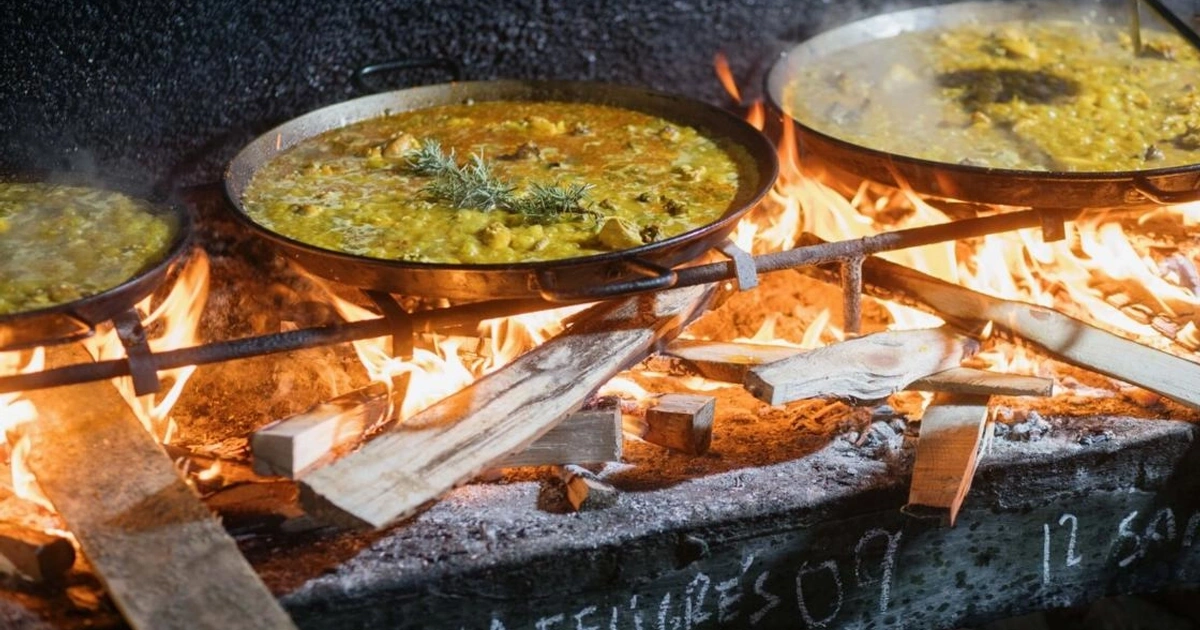
And it was cooked outdoors, over a wood fire, in the wide, shallow pan that would eventually give the dish its name.
The Pan That Became the Dish
Here lies one of the loveliest peculiarities of paella.
The word paella refers, traditionally, to the pan itself rather than the finished dish. Its origins are linked to the Latin patella, a broad, shallow pan.
In other words, we are quite literally naming the art after the canvas.
And the canvas matters.
The shape of the paella pan allows the rice to spread into a relatively thin layer, encouraging the broth to evaporate evenly rather than trapping the rice in a deep pool of liquid.
This is one of the reasons paella is not simply “rice cooked in stock.”
It is an exercise in controlled evaporation.
The ingredients may be humble. The physics are not.
The Sacred Geometry of the Socarrat
A proper paella is not supposed to be creamy.
This is perhaps the first important distinction.
The rice should absorb the flavour of the broth while remaining relatively distinct. Once the rice has been distributed across the pan, it is generally left alone.
Which brings us to one of the first culinary commandments.
The Stirring Sin
Once the rice is in the pan, leave it alone.
Stirring encourages starch release and changes the texture. It is one of those small interventions that seems harmless until you realise that you have wandered into risotto territory without a passport.
Paella is not looking for creaminess.
It wants clarity.
And then, if the cook has played everything correctly, there is the socarrat.
The socarrat is the toasted, crisp layer that develops at the bottom of the pan as the cooking finishes. It is not an accident or an unfortunate consequence of leaving lunch unattended.
It is the prize.
Among Valencians, the socarrat is not merely a technical detail. It is contested real estate: the concentrated, toasted final expression of everything that has happened above it.
If there is no socarrat, some people will tell you that you haven’t really had paella.
We would recommend treating this as an opinion rather than a criminal statute.
But perhaps don’t argue about it while holding the serving spoon.


A Short Guide to Culinary Crimes
There are many ways to upset a Valencian.
Some require considerably less effort than others.
1. The Chorizo Heresy
Let’s settle this one first.
Chorizo is not a traditional ingredient of Paella Valenciana.
This does not mean chorizo is an inherently bad thing. Far from it. It simply means that putting it into a traditional Valencian paella is rather like turning up to a classical concert with a drum kit.
Jamie Oliver learned this lesson publicly.
And, to be fair, the rest of us learned something too: if you want to start an international conversation about cultural identity, put chorizo in a paella and wait.
2. The Stirring Sin
We have covered this, but it deserves repetition.
Do not stir the rice once it is distributed.
The cook has done the difficult part. Your contribution is to resist helping.
3. The Mixed Identity Crisis
Here we need a little nuance.
Valencia has an extraordinary repertoire of rice dishes, including seafood preparations cooked in the same broad, shallow pans.
The problem is not seafood.
The problem is pretending that every rice dish cooked in a paella pan is therefore Paella Valenciana.
The traditional Valencian version has its own identity and its own ingredients. Seafood rice has another.
The official Valencian gastronomic tradition is considerably more interesting than the simplistic idea that there is only one correct rice dish.
In other words: order seafood rice if you want seafood rice.
Just don’t put rabbit, chicken, prawns, mussels and chorizo into the same pan and expect nobody to ask questions.
The Rice Is Not an Accessory
One of the easiest mistakes for visitors is to think of rice as the supporting actor.
In paella, it is the negotiator.
The rice absorbs the broth, carries the flavour of the ingredients and ultimately determines much of the texture of the finished dish.
Valencia has its own rice-growing tradition and protected varieties including Senia, Bomba and Albufera, each with different characteristics and capacities for absorbing liquid and flavour.
This is why the story of paella cannot really be separated from the story of the landscape.
The rice did not simply arrive on a plate.
It grew here.
It was cultivated here.
It absorbed water from these wetlands and became part of the agricultural economy and cultural identity of the region.
And that is when paella becomes more than lunch.
It becomes geography you can eat.
The Fire Matters Too
Traditionally, paella was cooked outdoors over wood.
And in Valencia, orange wood has become closely associated with the traditional preparation, particularly because it burns hot and steadily and contributes its own aromatic character to the cooking process.
It is tempting to turn this into another absolute rule.
Don’t.
Authenticity is rarely that tidy.
The important thing is the relationship between the pan and the fire: heat must be controlled, evaporation understood, and timing respected.
The traditional orange-wood fire adds another sensory layer to the experience, but it is not a magic ingredient that can rescue bad technique.
The fire, like the rice, is part of the conversation.
The Geography of the Spoon
There is another Valencian tradition worth knowing before you sit down to a proper paella.
It is communal.
The pan arrives at the centre of the table, and traditionally diners eat from the section in front of them rather than immediately launching a cross-table assault on the socarrat.
This creates a curious geography of lunch.
There are territories.
There are borders.
There are negotiations.
And eventually, there is the person who has somehow acquired an unreasonable amount of socarrat.
We advise diplomacy.
After all, the dish has been teaching us about it for centuries.
Seeking the Soul
And this is where the story becomes more interesting than a list of ingredients.
You can eat paella in the centre of Valencia.
You can eat excellent paella in a beautiful restaurant.
You can photograph the pan, post it on Instagram and declare that you have “done Valencia.”
But the dish makes considerably more sense when you understand the landscape that produced it.
1. The wetlands of l’Albufera.
2. The rice fields.
3. The irrigation channels.
4. The agricultural traditions.
5. The open fire.
6. The patience.
The extraordinary fact that a dish so globally recognisable began as something so local.
To experience paella at its most meaningful, therefore, is not simply to find a restaurant serving a respectable version of it.
It is to follow the rice back towards its origins.
To leave the postcard behind and enter the landscape where the grain was cultivated, where the traditions developed, and where food remains inseparable from place.
This is the Valencia that interests us at le Luxure.
Not Valencia as a collection of attractions.
Valencia as a living culture.
For those who seek the origin—not the postcard version, but the ancestral pulse of the dish—there is another way to experience it.
Birthplace of Rice: Flavors with a Valencian Soul takes you beyond the obvious and into the landscape where rice, agriculture, history and Valencian cuisine meet.
It is less a tour than a journey into context: a chance to understand why this particular rice became this particular dish, and why the landscape surrounding Valencia is as important to paella as the ingredients in the pan.
Stay for the landscape.
And, if everything has gone according to plan, save room for the socarrat.